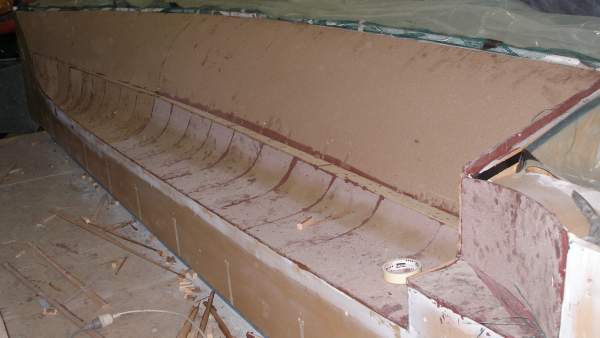
Cutting Foam and Vacuum Bagging
 The
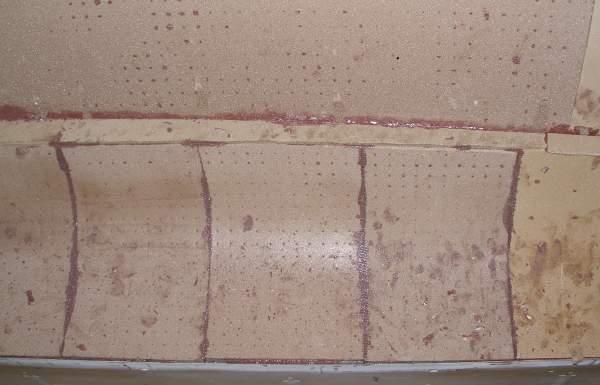
foam needs to be cut to shape and heated so it can be bent to
approximate the hull curve, pieces are then numbered. Note the peelply
still in place to help stop dust and grime collecting on the outer
skin. The foam has small holes (either as part of manufacturing or
added manually about 4cm apart) to allow excess resin and bubbles to
escape.
The
foam needs to be cut to shape and heated so it can be bent to
approximate the hull curve, pieces are then numbered. Note the peelply
still in place to help stop dust and grime collecting on the outer
skin. The foam has small holes (either as part of manufacturing or
added manually about 4cm apart) to allow excess resin and bubbles to
escape.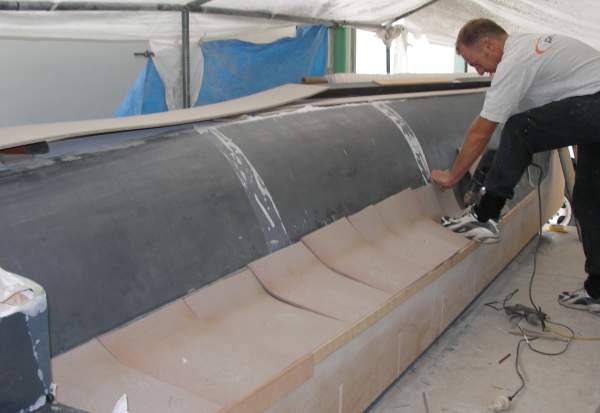
The
peelply is removed and any waxy bits given a light sand, after a
cleanup the outer skin has a thin layer of very runny resin (with lightweight
fairing compound and glue powder added) applied. The foam is treated similarly, just
enough to fill the rough foam surface and achieve good adhesion.
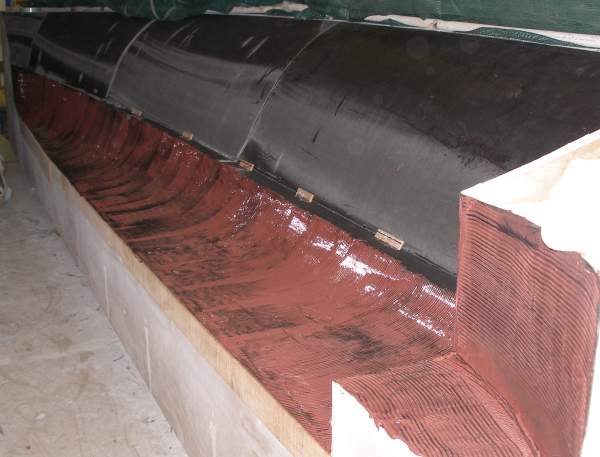
The
foam is then applied in numbered order from the transom. In the photo
below, the glue layer still needs to be evened up and the excess
removed.
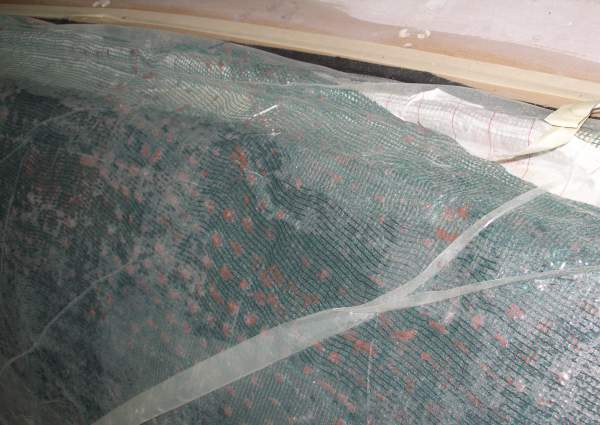
Once
the foam is in place a layer of scrim (windbreak type material) is laid
over, this aids the vacuum pump removing the air, then the bag is
applied with doublesided tape. When the vacuum is applied care is
required to ensure the foam goes down evenly and doesn't move or
overlap.

After vacuuming some note the excess resin has migrated up through
the small holes in the foam. It is removed with a disk sander before
the next layer of carbon is applied.
The foam is done in several stages with the foam for the chines being added last.
Starboard hull half with 8mm foam layer all ready for some final shaping.